
If you’re not learning AI right now, by this same time next year, you are going to lose your job. You think I’m joking? Let me read you the headlines.
-
“US layoffs for October surged to a two-decade high,” Challenger data shows.
-
“Global firms slash jobs amid weak sentiment (AI push).” * “Amazon to cut about 14,000 corporate jobs in AI push.”
If you are not learning AI, you are going to be left behind. As 2025 comes to an end, let’s take a good look at the shifts in employment throughout the year and what you should be thinking about as we move into 2026.
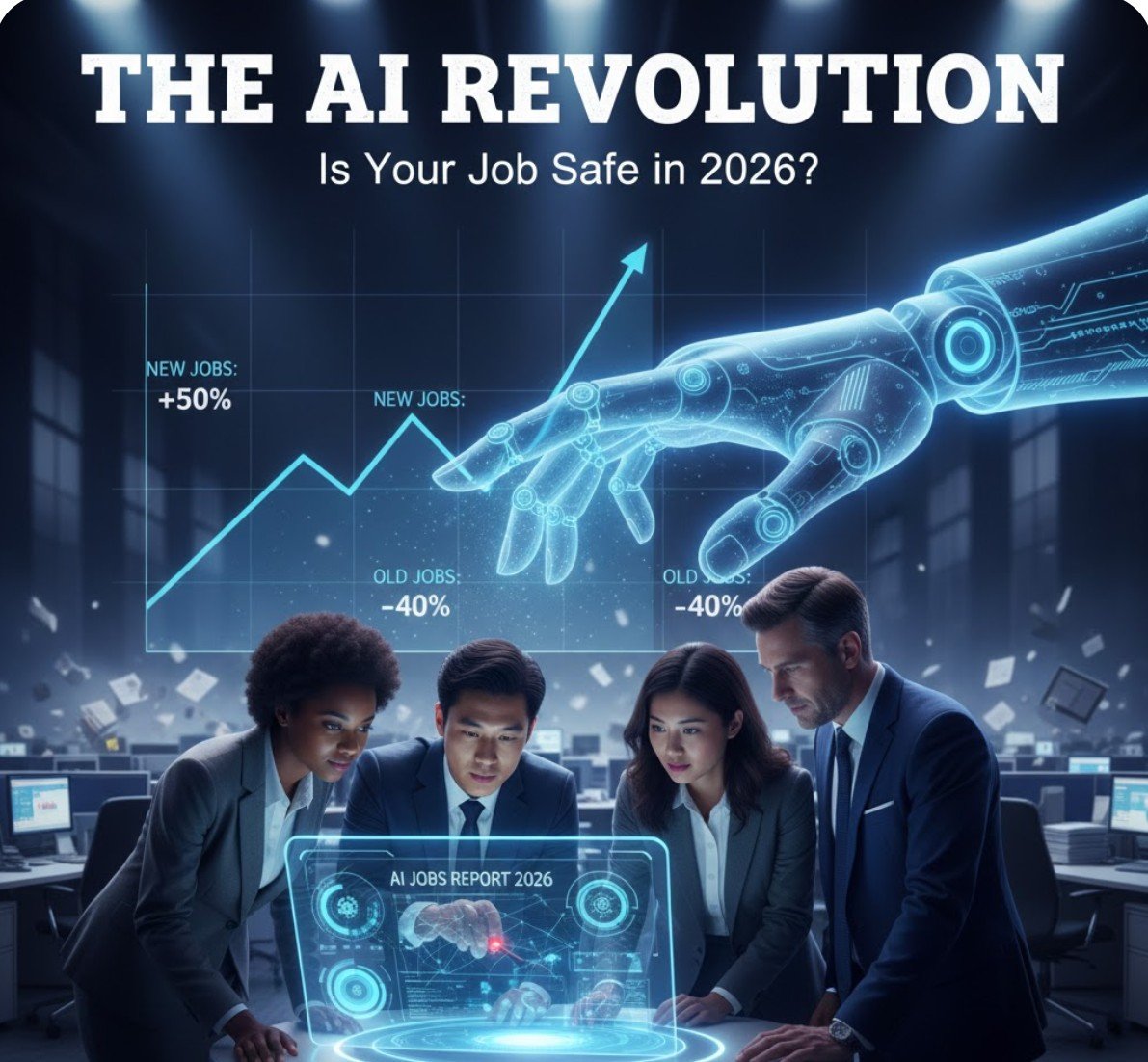
ai job revolusion in 2026
Behind the Scenes with Sylvie
Hi! Thank you so much for being here. My name is Boa, and I’m a startup founder and content creator. Many of you know me from my scholarship videos, which have now morphed into an entire startup. If you know anyone searching for scholarships, send them to our LinkedIn page.
Here, I’m sharing the behind-the-scenes life of a first-time founder and my commentary on the world. If you’re new, please like this post, and share your thoughts in the comments!
What the CEOs are Saying (The “Un-Sugarcoated” Truth)
The leaders of the world’s biggest tech firms are being brutally honest about the future of work.
-
Andy Jassy (Amazon CEO): He admitted that AI will make some corporate roles redundant. “We’ll need fewer people doing some of the jobs that are being done today and more people doing other types of jobs.”
-
Dario Amodei (Anthropic CEO): He was even blunter, stating that AI could eliminate half of all entry-level white-collar jobs, bringing unemployment to 10–20% in the next 1 to 5 years. He warned that companies and governments need to stop “sugar-coating” the mass elimination of roles.
-
Mika Kaufman (Fiverr CEO): In a viral comment, he said, “AI is coming for your jobs. Heck, it’s coming for my job, too.” It doesn’t matter if you are a programmer, designer, lawyer, or customer support rep—AI is coming for everyone. No one is safe in this extremely AI-driven world.
The Future of Jobs: Growth vs. Decline
It isn’t all “doom and gloom.” I’ve been diving deep into the World Economic Forum’s Future of Jobs Report 2025 to figure out what the landscape looks like for 2026.
Top Fastest Growing Jobs
When I looked at this list, I saw a lot of “Engineers”:
-
Big Data Specialists (Highest growth)
-
Fintech Engineers & AI/Machine Learning Specialists
-
Software and Application Developers
-
Autonomous and Electric Vehicle Specialists
-
UI/UX Designers
-
Environmental Engineers
The Social Science Dilemma: As a social scientist myself (Bachelor’s, Master’s, and PhD), I wondered: Are we heading toward a world where only engineers are needed? The answer lies in how we adapt.
Top Fastest Declining Jobs
These are mostly repetitive roles that AI can handle easily:
-
Postal Service Clerks
-
Bank Tellers
-
Data Entry Clerks
-
Administrative Assistants & Executive Secretaries
-
Accounting and Bookkeeping Clerks
-
Legal Secretaries & Telemarketers
Must-Have Skills for 2026
We are in the middle of an AI Revolution, similar to the dot-com era that wiped out CD and DVD rental stores. To survive, you need these skills:
-
AI and Big Data: This is the #1 skill to acquire.
-
Technological Literacy & Cyber Security: Essential for the digital age.
-
Creative Thinking & Resilience: You must be agile enough to upgrade your skills when a job role changes.
-
Leadership and Social Influence: Start creating content! Build your “thought leadership” in your space.
-
Systems Thinking: Learning how different parts of a business or technology interact.
-
Soft Skills: Empathy, active listening, and mentoring.
How to Start (Without the Overwhelm)
I’ll be honest: I am scared, too. I’ve been trying to learn AI since April, and it moves so fast it’s hard to know where to start.
I’ve developed a curriculum that makes AI easy to understand for non-engineers. For example, instead of spending 100 hours reading 100 PDFs, how can you use AI to compress that work into two hours?
If you want to learn how to apply AI to your daily life, subscribe to my Substack Newsletter (link in the description box). Every week, I send bite-sized pieces of AI knowledge you can actually use.
Are you ready for the jobs of the future? Let’s have a conversation in the comment section.
Would you like me to create a list of recommended AI tools specifically for social scientists or administrative professionals to help you get started?
Have any thoughts?
Share your reaction or leave a quick response — we’d love to hear what you think!
-
 0
0
-
 0
0
-
 0
0
-
 0
0
-
 0
0
-
 0
0
